Insurance for Food Trucks in Oregon
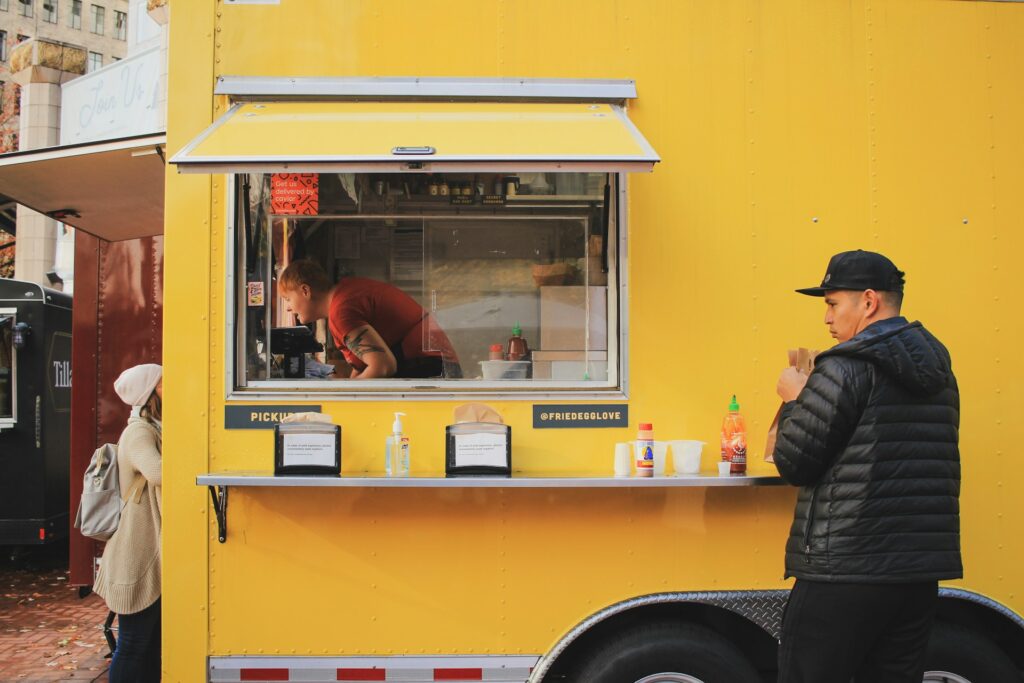
Insurance for food trucks in Oregon matters when you think about how many operators spend $50,000 or more to start their business. Food trucks face unique insurance challenges because they function as commercial vehicles, food service operations and small businesses at once. How to start a food cart business has complex coverage requirements you must navigate, from commercial auto liability with Oregon’s minimum $750,000 per accident limit to product liability protection. This guide covers everything in securing proper insurance, meeting state requirements and protecting your mobile food venture.
Oregon Food Truck Insurance Requirements
Running a food truck on Oregon roads means you need specific insurance coverage types that protect your business and comply with state regulations. These requirements are different from standard restaurant insurance because your vehicle doubles as your kitchen and point of sale.
Commercial Auto Insurance: Your Legal Obligation
Commercial auto insurance covers your food truck while driving on public roads. It protects against accidents, property damage and liability claims. Personal auto policies exclude coverage for vehicles we used in business operations. You need commercial auto coverage if you use your food truck for any business purpose, including trips to restaurant supply stores.
This coverage protects you in at-fault accidents. It provides uninsured and underinsured motorist protection. An injured person could sue you without it. Damages that exceed your policy limits could expose your business to lawsuits.
General Liability Insurance for Customer Protection
General liability acts as your first line of defense against customer injuries, property damage and lawsuits. This coverage handles medical expenses and legal costs when customers slip near your truck or sustain injuries on your premises. If someone trips over your service window step during Oregon’s rainy season, general liability covers their medical bills and any legal fees that result.
Food service general liability is different from standard general liability because it has protection against foodborne illnesses. 1 in 6 Americans contract a foodborne illness each year, which leads to roughly 128,000 hospitalizations. This coverage becomes critical for mobile food operations. The policy covers bodily injury, property damage, personal and advertising injury, and medical payments for minor injuries.
Product Liability Coverage for Food Service
Product liability insurance protects you if a customer gets sick or injured after consuming your food. This coverage addresses claims that arise from food poisoning, cross-contamination, foreign objects in food, unlabeled allergens and dangerous packaging defects. Product liability pays your defense costs in lawsuits and any court judgments up to the policy limit. It also covers injury and medical treatment costs.
Most food product liability policies provide $1,000,000 per occurrence coverage with $2,000,000 combined limits. These limits represent the standard for small to mid-sized food businesses. Event organizers and licensing boards often require product liability insurance that exceeds $500,000 before allowing you to operate.
Workers Compensation for Oregon Food Truck Employees
Oregon requires workers compensation coverage if you have any non-owner or partner employees. This requirement applies even to part-time workers. The state mandates coverage if you employ one or more subject workers. Workers compensation provides medical care and wage replacement for employees injured on the job.
Cuts and lacerations account for 26% of reported injuries among food service workers. You pay all medical fees and legal services upfront without coverage. This can lead to large fines and imprisonment. The average cost of workers’ compensation in Oregon runs $60 per month or $715 each year. The Workers’ Compensation Division can determine you’re a non-complying employer. You must then reimburse all claim costs plus a penalty, which is around 20% processing fee.
Essential Coverage Types for Mobile Food Businesses
Beyond state-mandated coverage, your mobile food business needs protection for physical assets and income streams that keep operations running. Equipment failures and event requirements create risks that standard policies don’t address.
Equipment and Commercial Property Coverage
Commercial property insurance protects cooking equipment, refrigeration units, generators, and inventory from theft, fire, vandalism, and weather damage. This coverage extends to business personal property, which has anything you can move: laptops, mobile devices, card-payment terminals, point-of-sale tablets, blenders, and prep tables. Food trucks operate in a variety of environments from urban streets to remote festivals. This protection becomes necessary against multiple threats.
Standard business owner policies list a designated premises, your commissary or home office. Property losses often have coverage limitations subject to 1,000 feet from that designated location. Your hood or vital equipment fails at a venue outside this radius, and you won’t receive coverage. When you learn about insurance for food trucks Oregon operators need, verify your equipment breakdown applies to mobile equipment anywhere you operate.
Equipment breakdown insurance covers sudden and accidental damage to mechanical, electrical, or computer systems. This protection has off-premises accidents for equipment on someone else’s property or in transit, spoilage damage from power outages or contamination, expediting expenses to rush repairs, and business interruption costs. Generator failure represents one of the most common losses, with resulting income loss during repair or replacement periods[114]. Note that no policies cover engine failure or normal wear and tear. The loss must be sudden and accidental, such as malfunction or power surge[114].
Business Interruption Insurance
Business interruption insurance replaces lost income when unexpected closures prevent you from operating. Food truck businesses run on thin margins and face unique vulnerabilities. Your truck isn’t operating, and you lose daily sales while remaining responsible for loan payments, commissary fees, permits, insurance premiums, and employee wages.
This coverage replaces lost income based on historical financial records, covers ongoing fixed expenses like loan payments and commissary fees, pays employee wages to retain staff, funds extra expenses to minimize business suspension, and provides financial stability during recovery. Your engine requires major repairs that take your truck off the road for three weeks. Business interruption covers lost profits and ongoing expenses during that period. Fire damages cooking equipment that requires complete replacement and health authority reinspection. This coverage replaces lost income during weeks of downtime.
Premium costs for business interruption insurance run 2-3% of your overall business insurance package. Coverage has appropriate limits based on projected annual income, waiting periods that last 24-72 hours before coverage begins, maximum coverage periods that span 12 months, and specific exclusions affecting your operation.
Event and Festival Liability Coverage
Event organizers and venues demand vendor insurance before allowing you to participate in festivals, farmers markets, and special events. Most require vendors to carry insurance and may request to be listed on coverage as additional insured. Vendor liability insurance provides basic coverage starting at $49 per event with $1 million occurrence limits and $2 million aggregate limits.
Certificate of Insurance (COI) is proof that you carry adequate coverage. Event organizers request this documentation before setup. Vendor insurance options include single event coverage for one month or less, three-month coverage, six-month coverage, and 12-month coverage. Optional equipment and contents coverage through inland marine insurance is also available, with deductibles ranging from $250 to $2,500 based on limits. All items must be insured to 100% replacement cost value.
Festival vendor coverage protects against bodily injury claims around your food truck and seating areas, medical expenses from accidents, and property damage if your cart or setup damages event property. This specialized coverage provides temporary protection when problems arise at social gatherings and prevents you from paying out of pocket when things go wrong.
How to Get Food Truck Insurance in Oregon
Securing insurance protection for your Oregon food truck involves more than just purchasing policies. You need to work through specialized providers, manage documentation requirements and maintain compliance with state authorities.
Finding the Right Insurance Provider
Most insurance companies haven’t caught up with insuring food trucks yet. They increase premiums or simply don’t cover food trucks to compensate. You need agents that specialize in food trucks, understand them and have access to competitive markets.
Getting multiple quotes helps you find the best price on your food truck insurance. The process takes about 2 minutes to fill out a quote form. Specialized providers quote multiple insurance companies that focus on food truck coverage. A member of their team reaches out to understand your operations and needs, then provides a detailed proposal that compares your insurance quotes. This approach lets you shop all the main Oregon food truck insurance companies with ease.
Oregon has specific rules that govern food truck insurance. You must meet minimum coverage limits to keep operating. Additional requirements apply if you serve alcohol. Working with providers who specialize in restaurant industry coverage will give transparency and guidance through this process.
Meeting Certificate of Insurance (COI) Requirements
Request a Certificate of Insurance from your insurer right after purchasing each policy. Most providers offer instant digital download or email delivery within hours, meeting tight festival application deadlines of one to two weeks before events. Some providers supply COIs the same day as requested.
Compare each COI against specific event contracts, venue leases and permit applications to confirm your policy limits meet their minimum requirements. Most venues request limits that include $1,000,000 in general liability, $1,000,000 in auto liability and statutory required limits for workers compensation. Event organizers at Oregon Metro parks require a minimum of $1,000,000 coverage per occurrence.
Almost every festival and private property booking requires adding the event organizer or venue owner as an additional insured on your general liability policy. Contact your insurer to add specific entities by name for $25 to $50 per endorsement. Allow one to three business days for processing before your event starts. Food truck operators submit COIs 20 or more times yearly. Set reminders 30 to 60 days before each policy expires to avoid coverage lapses during peak festival season.
Filing Insurance Documentation with Oregon Authorities
Motor carriers applying for intrastate operations must file proof of public liability and property damage insurance with Oregon’s Commerce and Compliance Division at the time vehicles are registered. The filing must be received within 60 days of the vehicle being registered and enrolled in Oregon’s weight mile-tax program. Oregon’s minimum acceptable amount is $750,000 per accident for auto liability combined single limit.
Underwriting insurance companies file a Form E or Form H certificate of insurance as proof of insurance. Event permit and Certificate of Insurance must be received no less than 14 days in advance of your event.
Oregon Food Truck Licensing and Insurance Connection
Getting licenses for your mobile food operation ties directly to maintaining proper insurance documentation. Oregon authorities verify coverage at multiple checkpoints throughout the licensing process.
Mobile Food Unit License Requirements
Oregon requires a Mobile Food Unit License Application submitted to your Local Public Health Authority before operating. Different counties dictate factors including food types prepared on the truck versus at an offsite prep kitchen, risk levels of foods sold, and cooking methods used. Mobile food units fall into four classes (Class I through Class IV) based on setup and menu. Each class carries different rules and license fees that vary by county.
The mobile food facility permit ensures your space complies with local food safety and worker safety standards. You cannot operate without one. To get approval, you must demonstrate safe working environments for employees and safe food for customers. Public Health Permit costs range from $100 to over $1,000 depending on risk level.
Health Department Insurance Verification
Health departments verify insurance during pre-opening inspections and annual renewals. Operators must post licenses inside their cart along with copies of other licenses including commissary, warehouse, and fire permits. Inspectors may request to see current insurance documentation at any time during routine inspections.
Event Permit Insurance Requirements
Event organizers require Certificate of Insurance submission at least 14 days before your event. Oregon Metro parks mandate minimum $1,000,000 coverage per occurrence. Eugene requires general liability coverage of at least $2,000,000 per occurrence and $3,000,000 total for special events.
Fire Code Compliance and Coverage
The 2022 Oregon Fire Code Section 319 requires mobile food units with appliances producing smoke or grease-laden vapors to comply by January 1, 2025. Fire departments require operational permits. Portland charges $35 annually for portable propane device permits. Fire code violations result in citations and fines affecting your knowing how to maintain required insurance coverage.
Cost Factors for Oregon Food Truck Insurance
Premium costs for food truck insurance in Oregon vary based on coverage selection and operational factors. You need to know these variables to budget for protection.
Average Premium Ranges by Coverage Type
General liability coverage costs between $22 and $31 per month for most food truck operators, with industry averages around $42 monthly. Commercial auto insurance runs $170 per month on average, though rates swing based on your truck’s value and driving record. Workers compensation averages $78 per month. Most operators pay between $31 and $59 monthly. Business owner policies that combine liability and property coverage cost around $84 per month. Solo operators with simple setups should budget $200 to $280 per month for adequate coverage. Comprehensive packages range from $150 to $400 monthly.
Location Impact: Portland vs. Bend vs. Central Oregon
Densely populated urban areas drive premiums higher compared to rural locations. High-traffic zones raise accident exposure and theft risks. Portland’s urban density commands higher rates than operations in Bend or Central Oregon communities.
Claims History and Business Size Considerations
Past claims remain on your record for 3 to 5 years. Businesses that file multiple claims face rate increases of 40 to 60 percent. Each additional employee raises workers compensation costs since premiums calculate based on payroll. A solo operator pays much less than a truck running multiple staff members.
Get Coverage Now
Your mobile food business faces risks that need complete protection beyond simple coverage. Securing the right insurance package protects your investment and keeps you compliant with Oregon regulations while preventing financial disasters from unexpected events.
Start by connecting with specialized food truck insurance providers who understand your unique needs. They’ll help you with commercial auto requirements and general liability protection, plus workers compensation mandates. Budget between $200 and $400 monthly for adequate protection. Maintain your Certificates of Insurance to ensure smooth event bookings and license renewals.
You can focus on serving great food rather than worrying about what-if scenarios with proper coverage in place.