Protecting Your Oregon Food Business: Food Contamination/Spoilage Insurance Coverage
Food Contamination/Spoilage Insurance in Oregon protects your business from financial losses at the time refrigeration systems fail, power outages strike, or contamination incidents occur. A single equipment breakdown can spoil thousands of dollars worth of inventory within hours and threaten your operations and revenue. This coverage becomes especially critical to food-based businesses operating on tight profit margins.
Knowing how to file an insurance claim related to food spoilage and comparing insurance programs will give you the preparation you need when disaster strikes. This guide explains coverage options, claim processes, and how to find the right protection for your Oregon food business.
What Food Contamination and Spoilage Insurance Covers
Food Contamination Endorsement Coverage
This endorsement protects your inventory once contamination renders food unsafe to consume or sell. The coverage applies once chemical spills, pest infestations, or foreign substances compromise your stored products. You receive compensation for the market value of contaminated items that must be discarded.
The endorsement extends beyond physical contamination. Once reasonable suspicion of contamination exists, the policy covers disposal costs even if testing proves the food was safe. This provision recognizes that consumer safety concerns outweigh the cost of replacement inventory.
Spoilage Coverage from Equipment Breakdown
Your refrigeration and freezer systems keep perishable inventory fresh. Once these systems fail, spoilage coverage reimburses the value of ruined products. The protection activates during mechanical breakdowns and electrical failures that occur without warning.
Power outages trigger coverage once they result from events beyond your control. Equipment breakdown insurance programs for restaurants cover spoilage losses from utility interruptions, provided you managed to keep your cooling systems according to the manufacturer’s specifications. Backup generator failures also qualify for coverage once regular maintenance records demonstrate proper care.
Business Income Protection During Closures
An insurance claim for food spoilage often extends beyond replacing lost inventory. Once contamination or spoilage forces you to close, business income protection compensates for revenue losses during the shutdown period. This coverage maintains cash flow while you address the contamination source and restore operations.
The policy calculates payments based on your historical earnings and projected revenue during the closure period. You continue receiving income replacement while you clean and replace inventory and meet health department requirements to reopen. Ongoing expenses like rent and utilities remain covered during the interruption.
Clean-Up and Replacement Costs
Contamination incidents require full sanitization before resuming operations. This coverage component pays for professional cleaning services and disposal of contaminated materials and decontamination procedures mandated by health inspectors. The costs accumulate quickly once entire storage areas and preparation surfaces need deep cleaning.
Replacement extends beyond spoiled inventory. You receive funds to replace containers and packaging materials and equipment that contacted contaminated products. Strict food safety regulations mean items that touched contaminated substances cannot be salvaged. The policy covers these ancillary expenses that accompany major contamination events, whereas property coverage might exclude them.
Food Contamination/Spoilage Insurance in Oregon combines these four protection layers to address the unique risks your food business faces daily.
Oregon Food Businesses That Need This Coverage
Operating a food business in Oregon exposes you to unique contamination and spoilage risks that vary based on your business model and inventory volume. Whether your operation requires Food Contamination/Spoilage Insurance in Oregon depends on factors like refrigeration dependency, inventory turnover rates, and the perishable nature of your products.
Restaurants and Cafés
Your establishment maintains substantial perishable inventory in multiple storage systems. Walk-in coolers, reach-in refrigerators, and freezer units store proteins, dairy products, produce, and prepared items that spoil faster when temperature control fails. A refrigeration breakdown during dinner service can ruin an entire week’s worth of inventory within hours.
Health department regulations require you to discard any food stored outside safe temperature ranges, whatever the appearance. You need to file an insurance claim for food spoilage when equipment failures occur overnight or during holidays when repair services aren’t available right away. Your high inventory costs, coupled with tight profit margins, make contamination losses especially damaging to cash flow.
Food Trucks and Mobile Vendors
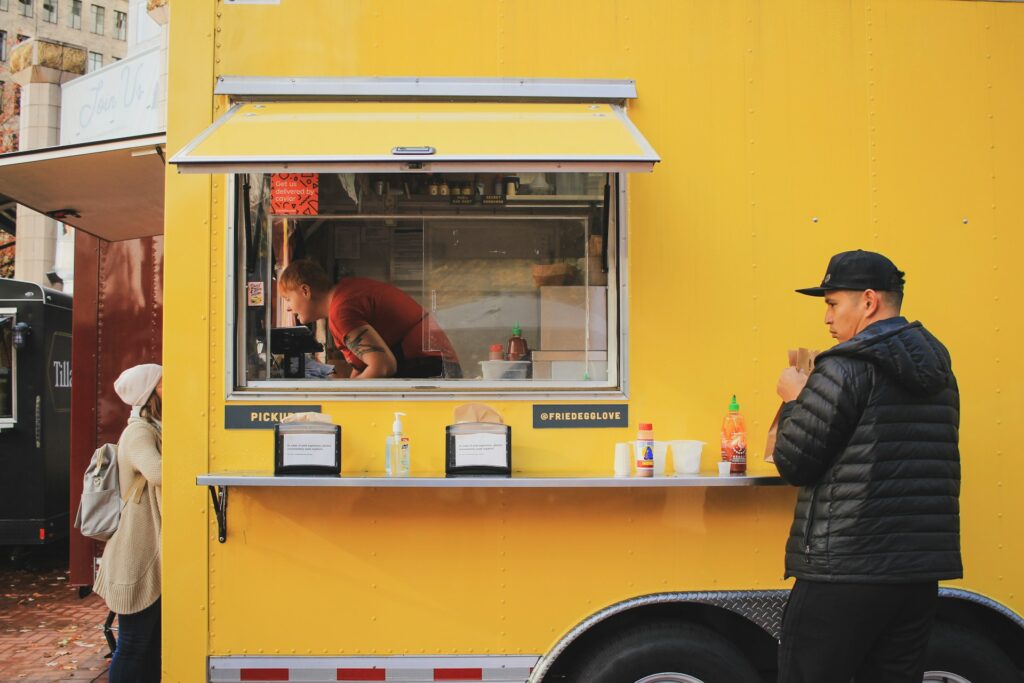
Mobile operations face amplified risks due to constant equipment stress and limited backup systems. Your refrigeration units endure vibration, temperature fluctuations, and mechanical strain that stationary equipment doesn’t experience. Generator failures during events leave you without power to maintain safe food temperatures.
Brick-and-mortar establishments can transfer inventory to backup coolers when equipment malfunctions. You can’t. A single breakdown at a weekend festival can destroy your entire mobile inventory. Your business model depends on event attendance and weather-dependent operations. This makes revenue recovery from spoilage losses more challenging without proper coverage.
Bakeries and Pastry Shops
Your production schedule creates inventory accumulation patterns that increase spoilage exposure. You prepare large batches of perishable items like cream-filled pastries and custards days before sale. Refrigerated display cases and walk-in coolers maintain product freshness, but mechanical failures compromise entire production runs.
Specialty ingredients represent significant investments. Premium chocolate, butter, eggs, and cream deteriorate faster without proper refrigeration. Contamination from pest infiltration or chemical exposure forces you to discard finished products and raw materials. Insurance programs for restaurants and bakeries recognize these layered inventory risks.
Catering and Event Services
You transport perishable inventory to off-site locations where environmental controls are less reliable. Food prepared in your commercial kitchen travels in refrigerated vehicles to venues with varying equipment quality. Power interruptions at event locations, equipment malfunctions during transport, or venue refrigeration failures can spoil hundreds of servings intended for specific events.
Catering contracts often require substantial upfront food purchases. Contamination or spoilage creates immediate financial strain. You cannot replace specialized menu items ordered for specific events on short notice. Your business income suffers when you must cancel events or provide refunds due to food safety concerns.
Food Manufacturers and Processors
Your operation maintains the highest inventory volumes among Oregon food businesses. Large-scale refrigeration systems, blast freezers, and temperature-controlled storage warehouses protect thousands of pounds of raw materials and finished products. A single compressor failure in a cold storage facility can spoil entire production lots valued at substantial amounts.
Processing operations introduce additional contamination risks. Equipment malfunctions, ingredient contamination, or packaging defects can compromise entire production runs before distribution. Your wholesale relationships and distribution commitments mean contamination incidents affect your inventory and your ability to fulfill contracts with retailers.
Food Contamination/Spoilage Insurance in Oregon protects these diverse business models against industry-specific risks that standard property coverage doesn’t address adequately.
How Food Contamination Insurance Works with Your Business Owners Policy
Your Business Owners Policy provides foundational property and liability protection, but Food Contamination/Spoilage Insurance in Oregon requires specific additions to address perishable inventory risks. These coverages create a complete protection framework tailored to food industry exposures when integrated.
Adding the Food Contamination Endorsement
The contamination endorsement attaches to your existing Business Owners Policy through a simple application process. Your insurance agent reviews your inventory types, storage methods, and facility size to determine appropriate coverage amounts. The endorsement modifies your base policy language to include contamination events that standard property coverage excludes.
You submit details about refrigeration capacity, average inventory values, and historical spoilage incidents during underwriting. Insurers assess your risk profile based on equipment age and maintenance protocols. Approval occurs within days, and the endorsement activates upon policy modification. Premium costs vary based on inventory values and business type, with restaurants and processors paying different rates.
Mechanical Breakdown Coverage for Refrigeration Systems
Refrigeration equipment coverage operates as either a standalone policy or an attachment to your Business Owners Policy. This component addresses mechanical failures in cooling systems that cause spoilage. Your walk-in coolers, freezer units, and refrigerated display cases qualify for protection when breakdowns occur despite proper maintenance.
The coverage triggers when motors burn out, compressors fail, or electrical components malfunction. You receive reimbursement for both equipment repairs and spoiled inventory resulting from temperature loss. Policies require regular maintenance documentation to verify claims. Maintenance records become critical evidence supporting your loss when filing an insurance claim for food spoilage related to equipment failure.
Business Interruption Coverage Integration
Business interruption protection coordinates with contamination coverage to address income losses during closure periods. The integration activates when contamination or spoilage forces temporary shutdown for cleaning and inventory replacement. Your policy calculates lost revenue based on historical earnings and projected sales during the interruption.
Extra expense coverage within the integration pays for cleaning services, rush equipment repairs, and temporary refrigeration rentals. These coordinated benefits prevent gaps between property damage recovery and income restoration. Insurance programs for restaurants structure this integration to match food industry cash flow patterns and seasonal revenue fluctuations.
Coverage Limits and Deductibles in Oregon
Coverage limits determine the maximum payout for contamination and spoilage events. You select limits matching your typical inventory values and peak storage periods. Higher limits increase premium costs but provide adequate protection during high-volume periods.
Deductibles represent your out-of-pocket expense before insurance payments begin. Oregon food businesses choose deductibles between standard amounts and balance premium affordability against claim thresholds. Lower deductibles mean higher premiums but reduce financial strain during loss events. Your selection should reflect cash reserves available for unexpected spoilage incidents, provided you can absorb the deductible amount without operational disruption.
Filing an Insurance Claim for Food Spoilage in Oregon
How quickly you respond when spoilage happens determines how smoothly your claim progresses. The actions you take right after finding contaminated or spoiled inventory directly affect reimbursement speed and claim approval rates.
Documenting the Loss Event
You need to photograph spoiled inventory before disposal. Images should show temperature readings on failed equipment, visible contamination and the overall scope of affected products. Close-up shots of individual items and wide-angle views of storage areas are both necessary. Time-stamped photos establish the loss timeline and verify claim accuracy.
Equipment failure details must be recorded in writing. You should note when you found the malfunction, temperature readings at that time and equipment model numbers. Any warning indicators or unusual sounds that came before the breakdown should be documented. Refrigeration system maintenance logs and recent service records need to be saved. These documents demonstrate proper equipment care and support your insurance claim for food spoilage.
Damaged equipment should be preserved until inspectors assess the failure. Malfunctioning units should not be repaired or replaced before your insurer examines them. An inventory list detailing every spoiled item is essential and should include purchase dates, quantities and replacement costs. Supplier invoices and receipts proving inventory values must be retained.
Notifying Your Insurance Provider
You should contact your insurance agent or carrier within 24 hours of finding the loss. Most Food Contamination/Spoilage Insurance in Oregon policies require prompt notification to activate coverage. Simple incident details should be provided during the first contact: what spoiled, estimated loss value and the cause of spoilage.
Claim forms and instructions specific to your policy should be requested. Required documentation and inspection scheduling need to be clarified. Your claim number should be obtained to track progress. Your insurer assigns an adjuster who guides you through the remaining process steps.
Working with Adjusters and Inspectors
The adjuster schedules an on-site inspection to verify your loss. All documentation collected during the loss event should be prepared for their review. You’ll walk the adjuster through your facility and explain your normal operations and how the spoilage happened. Questions about inventory turnover, storage procedures and equipment maintenance protocols will need answers.
Health department inspectors may also visit if contamination triggered the claim. Their reports influence settlement decisions. Full cooperation with all inspectors is necessary while you maintain copies of any reports they generate. The adjuster reviews your documentation, inspection findings and policy coverage limits to calculate your settlement offer.
Settlement Timeline and Expectations
Simple spoilage claims from equipment breakdown settle within two to four weeks. Complex contamination incidents involving health department investigations extend the timeline. Your insurer processes payment once you accept the settlement offer and submit any final documentation.
Partial payments may arrive before final settlement when losses exceed certain thresholds. These advance payments help you replace inventory and resume operations while the adjuster completes the full assessment. Settlement amounts reflect your coverage limits, deductible and documented losses. Disputes arise when documentation appears incomplete or maintenance records show equipment neglect, which can delay final payment.
Insurance programs for restaurants recognize that quick settlements support business recovery and customer service continuity.
Finding Insurance Programs for Restaurants in Oregon
Securing appropriate coverage requires strategic partner selection and careful policy assessment. Your choice of insurance provider and policy structure affects both protection quality and claim experience when contamination or spoilage occurs.
Working with Licensed Oregon Insurance Agents
Licensed agents in Oregon possess state-specific knowledge about food industry insurance requirements and available coverage options. These professionals understand local health department regulations and common equipment failure patterns. They also know seasonal risks that affect Oregon food businesses. A single agent relationship gives you access to multiple insurance carriers. Working directly with insurers limits your options to that company’s products.
Agents who specialize in restaurant and food service insurance bring industry expertise to coverage design. They recognize the difference between fine dining establishments that require high inventory limits and food trucks that need mobile equipment protection.
Comparing Business Owners Policies
Base Business Owners Policies vary in contamination and spoilage protection. Some carriers include simple spoilage coverage, while others require separate endorsements for any perishable inventory protection. You need to get into each policy’s contamination definitions, covered causes of loss, and sublimits that cap specific loss types.
Premium costs reflect coverage breadth and your business risk profile. Policies with lower premiums often contain restrictive contamination language or higher deductibles. Review waiting periods for equipment breakdown coverage. Some policies exclude claims during the first 30 to 60 days after activation. Compare how different insurers handle business interruption calculations and extra expense provisions following contamination events.
Understanding Oregon-Specific Requirements
Oregon food businesses must comply with state health department regulations that influence insurance needs. Your coverage should line up with disposal requirements, cleaning protocols, and temperature monitoring standards that Oregon authorities mandate. Some insurance programs for restaurants include consultation services that help you meet these compliance obligations.
State licensing requirements for food processors, manufacturers, and mobile vendors create additional coverage considerations. Your policy should address transportation risks and commissary kitchen operations. It should also cover temporary event permits common in Oregon’s food truck culture.
Getting Multiple Quotes for Best Coverage
Request quotes from at least three different insurance providers to establish competitive pricing standards. Provide identical information to each carrier and ensure quotes reflect comparable coverage limits and deductibles. Review how insurance claim processes for food spoilage differ between carriers, particularly regarding documentation requirements and settlement timelines.
Assess each quote beyond premium costs. Think about carrier financial strength ratings, claim payment histories, and customer service accessibility. Lower premiums lose value when carriers delay settlements or dispute legitimate claims during critical business recovery periods.
Take the Next Step
Your Oregon food business faces constant contamination and spoilage risks that can destroy inventory and halt operations within hours. Food Contamination/Spoilage Insurance protects your investment by covering equipment breakdowns, contamination incidents, and cleanup costs that standard property policies exclude.
We covered everything in coverage components and identified which food businesses need protection. We also explained how to file an insurance claim for food spoilage. As licensed Oregon agents, we can help you compare insurance programs for restaurants and secure appropriate coverage limits.
Protect your business proactively. Review your current policy and document your inventory values. Get quotes that match your specific operational risks.